
Service Lines
What are service lines?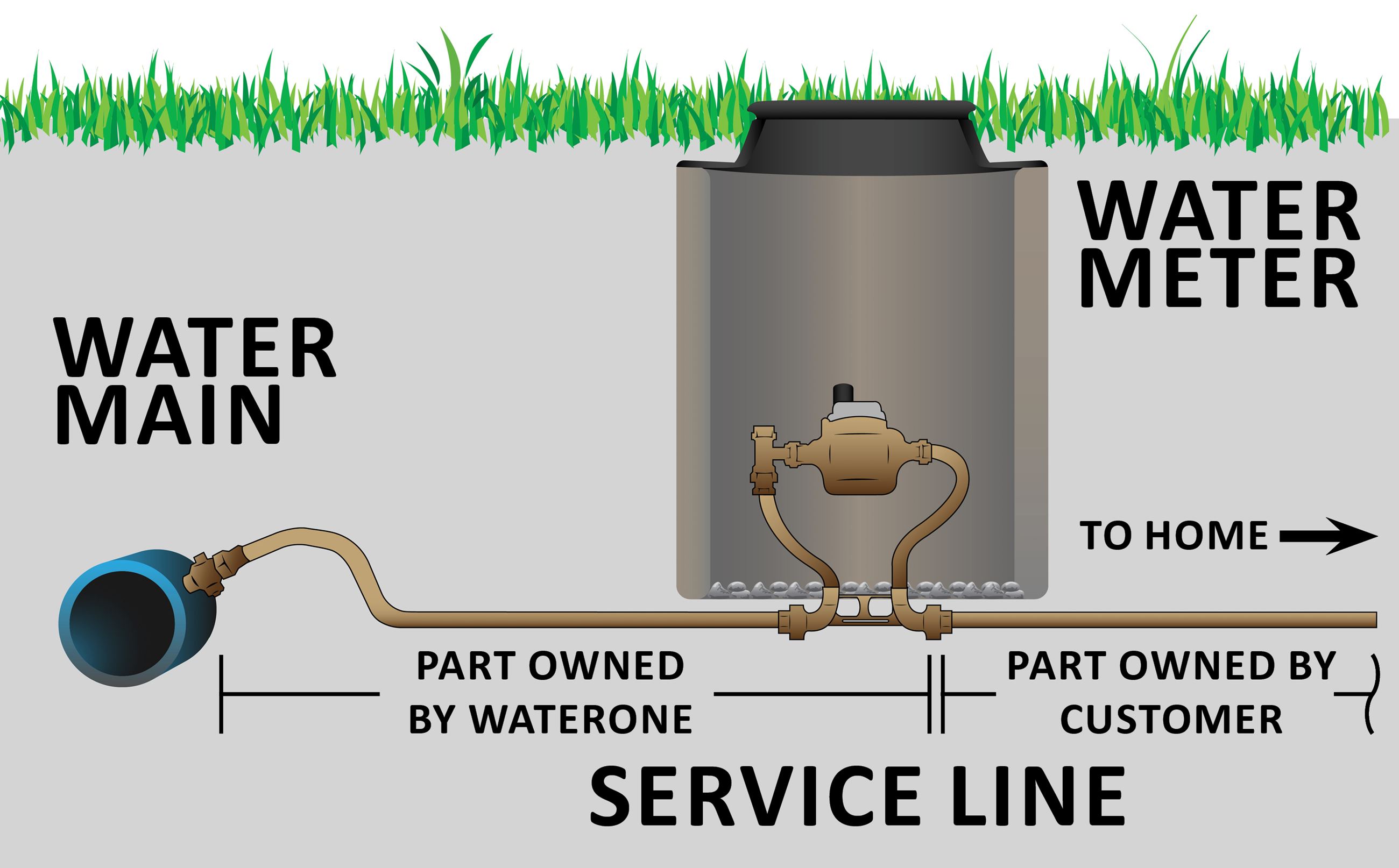
A service line is the pipe that supplies water service to your address from the public water main. The utility-owned section is owned and maintained by WaterOne. The private (customer-owned) section of the service line runs from the water meter to the residence or business, and is the responsibility of the customer to repair and maintain as part of the property’s plumbing system.
Service Line Warranties
Many homeowners' insurance policies do not cover water line repairs. To verify whether water damage and water line repairs are covered in your policy, contact your insurance company.
If you're interested in water line warranty coverage, check out HomeServe. Emergency assistance for disadvantaged customers may also be available through the HomeServe Cares program.
WaterOne is not responsible for water damage that occurs, whether from a property's internal plumbing or as a result of a water main break. Read more about damage claims.
What Is My Service Line Made Of?
In our region, copper and plastic are the most common materials for service lines. However, other materials may have been used depending on the age of the property and other factors.
Plastic: Plastic is a commonly used material for modern service lines and plumbing. This includes materials such as PVC, HDPE, PEX, and more.
Copper: Copper is also a commonly used material for modern service lines and plumbing. Copper is an orange-brown metal that is shiny when scratched. Pennies are made from copper and have a similar appearance. A magnet will not stick to a copper pipe.
Galvanized Steel: Galvanized steel is a shiny or dull gray color. Galvanized pipes are straight and shiny when scratched, and a magnet will stick to it. Galvanized service lines and internal plumbing in good working condition are considered safe for drinking water.* Galvanized pipe is no longer used in modern construction, although galvanized service lines and plumbing are often found in older properties.
*Please note that the United States Environmental Protection Agency (EPA) advises that galvanized plumbing should be replaced if it has ever been downstream from or connected to plumbing containing lead.
Risks of Lead In Plumbing
WaterOne has no record of lead utility service lines being used in our distribution system, and lead was not commonly used for private service lines in our region. If WaterOne has records showing that your property has a lead service line, we’re required to let you know.
Lead is a soft, dull grey metal. Lead scratches easily, can appear bent or bulging, and magnets will not stick to it. Lead is harmful to consume and over time can cause serious health effects.
WaterOne is committed to protecting the health and safety of our customers, and we protect against lead exposure in many ways. WaterOne’s treated water is lead-free when it reaches your property. WaterOne also uses water treatment methods that help prevent water from picking up impurities from private plumbing. Learn more about lead in plumbing.
Identifying Your Service Line Materials
Here’s a few different ways to learn more about the material your service line is made of.
- Check WaterOne’s Records: Use WaterOne’s Service Line Lookup tool to see a map of the material status of all recorded service lines in WaterOne’s service area.
- Call a plumber: A licensed plumber can help you check your property’s plumbing materials and offer advice on any improvements, replacements, or upgrades.
- See for yourself: Locate where your service line enters your home or building and visually identify the material. Use the EPA’s interactive Protect Your Tap guide for help locating your line and checking what it’s made of.